
The headline is straightforward: the UK has just recorded its strongest first half for certified small-scale renewables. The useful detail is where the workload is growing. Solar remains the main driver, battery storage is catching up quickly, and more homes now involve two technologies rather than one.
That changes the job before installation starts. A busy sales pipeline can be created from aerial imagery and an early system proposal, but the designer still needs roof dimensions, obstructions, access, electrical context and a sensible battery location. When those details arrive late or incomplete, survey capacity becomes the bottleneck.
UK solar installations 2026: the figures behind the record
MCS data reported on 21 August recorded approximately 210,000 certified installations between January and June. That was 17% above the previous best opening half-year, set in 2025, and worked out at roughly one certified installation every 74 seconds.
These are MCS-certified installation figures, not a count of every renewable product sold or every project completed in the UK. That distinction matters, especially when comparing installations with manufacturer sales or work outside MCS's scope. Even with that caveat, the direction is clear: certified domestic solar and battery activity is running at record pace.
Solar and battery are becoming one brief
Battery storage is no longer a small side-market. The reported first-half total of 36,000 installations almost matched the whole of 2025 in six months. More importantly for survey scope, 92% of those batteries were installed at properties with solar panels.
The wider MCS figures point in the same direction. One in three installations during 2026 either went into a home that already had an MCS-certified renewable system or formed part of a combined installation. The property may already have panels, an inverter or an export arrangement before the surveyor arrives. A new solar proposal may also need to reserve a battery position and cable route even when storage is planned for later.
That is why a roof-only survey can be too narrow. The roof still matters, but so do the meter position, consumer unit, inverter options, cable routes, existing equipment and the space available for storage.
A faster market puts pressure on the survey stage
Online design tools are useful at the start of a solar enquiry. They can identify a likely roof plane, estimate the available area and help a sales team discuss an early layout. They cannot see every hip, valley, damaged tile, hidden access problem or electrical constraint.
The risk appears when the early proposal starts to behave like a finished design. A missing roof measurement may reduce the usable array. A chimney or tree may change the shading result. A battery position that looked convenient on a floor plan may not work once clearances, access and cable length are considered.
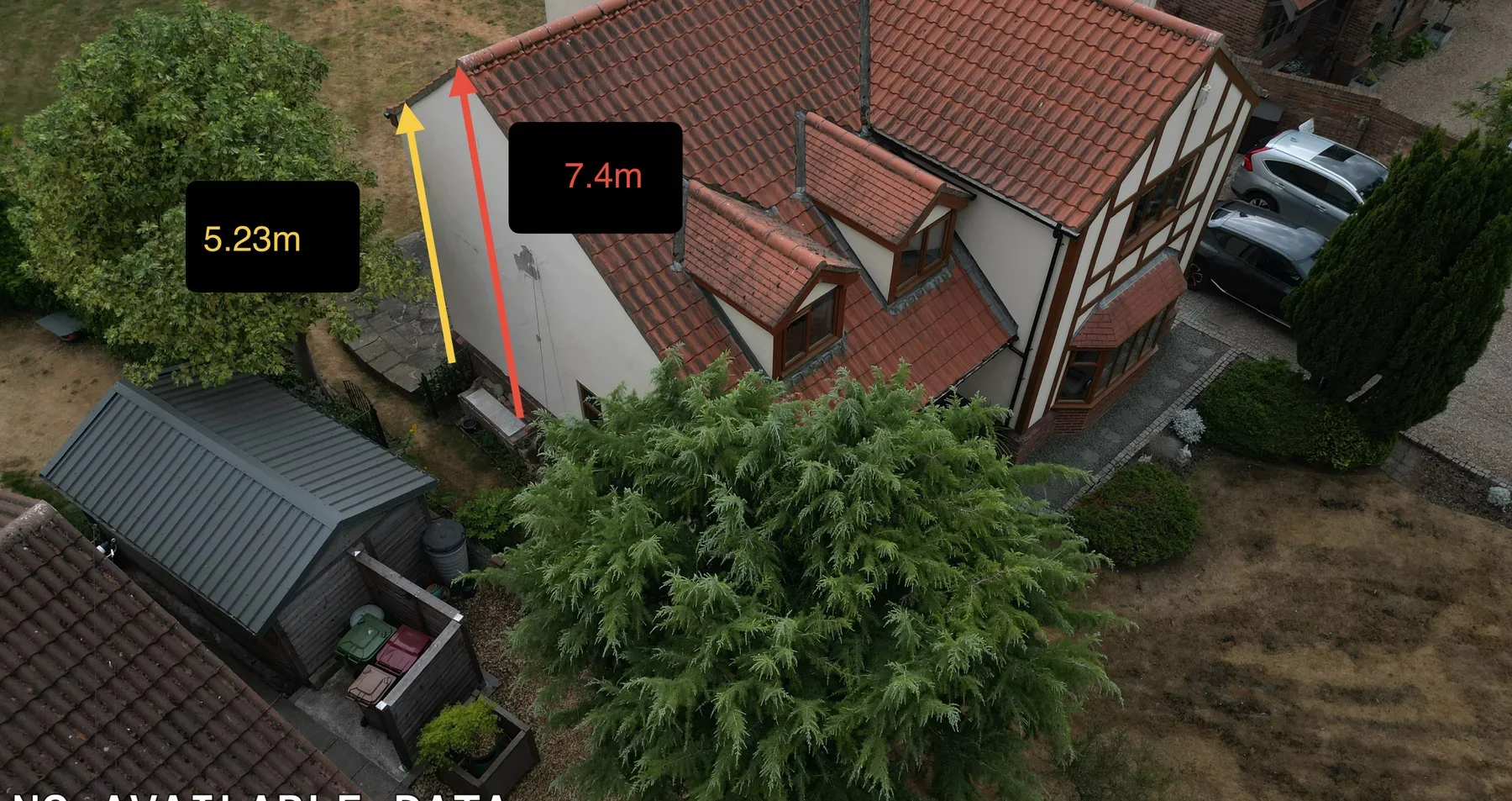
As volumes rise, small omissions become expensive. One clarification call across a handful of jobs is manageable. The same gap across a national programme or a dense week of bookings can slow quoting, design approval and installation planning at the same time.
What a current solar survey brief needs to cover
A useful brief should follow the decisions the installer has to make. The exact scope varies by company, but a domestic solar and battery survey commonly needs:
| Area | Evidence to collect | Decision it supports |
|---|---|---|
| Roof | Usable planes, dimensions, pitch, direction, covering, obstructions and visible condition. | Panel layout, system size and whether further roof advice is needed. |
| Shading | Trees, chimneys, dormers, neighbouring buildings and other near obstructions. | Performance estimate and layout changes. |
| Access | Vehicle approach, scaffold constraints, gates, extensions and working space. | Installation planning and realistic pricing. |
| Electrical | Meter, cut-out, consumer unit, existing generation and plausible cable routes. | Electrical design, upgrade questions and inverter position. |
| Battery | Proposed location, access, clearances, construction and relationship to existing equipment. | Whether storage works now or can be added later without redesigning the job. |
The finished report should also make uncertainty visible. If a loft could not be entered, a measurement could not be taken safely or an electrical detail needs confirmation, the installer should see that immediately rather than discover it after the quote has been accepted.
The heat-pump figure needs a careful reading
The same data showed certified heat-pump installations 17% below the first half of 2025. That is a real warning for the retrofit market, but it is not the whole story. Heat Pump Association UK reported that space-heating heat-pump sales were 2% higher year on year, while installations in new-build properties increased by 23%.
The difference between sales, MCS registrations, retrofit programmes and new-build activity means the market cannot be described by one number. It does show how quickly workload can move between routes. Survey businesses and installer teams need systems that can handle heat loss, siting, electrical and property evidence when demand returns or a programme releases a concentrated batch of work.
Where Vertex fits when survey demand rises
Vertex works as survey infrastructure for installer teams. Capacity is planned around postcode density, access and the agreed brief, then expanded by training additional surveyors in the same field method and reporting standard.
The quality check happens while the visit is still live. As soon as the surveyor completes the record on site, the office reviews it and confirms whether anything is missing or whether the surveyor is clear to leave. That is much more useful than finding a missing roof plane or consumer-unit photograph after the surveyor has driven to the next county.
Completed records and reports move through the Vertex Portal, giving installer teams a consistent handover rather than a chain of messages, loose photographs and separate files. The same operating model supports high-volume programme work and individual installer bookings.
What installer teams should take from the figures
- Plan for combined jobs. Solar, batteries and existing equipment increasingly belong in the same property record.
- Keep online design in its proper place. It is a strong early tool, but it does not replace site evidence for the final design and installation plan.
- Protect the survey stage before volume arrives. A clear brief, trained surveyors and immediate quality checks prevent small gaps becoming programme-wide delays.
- Measure capacity honestly. Daily output depends on route density, access and property complexity, not only the number of names in the diary.
Vertex provides solar, battery, heat-pump and heat-loss surveys for installer teams across the UK. Review the solar survey scope, see the current report format or use the installer guide pricing.
Sources checked
- National Sustainability News: MCS first-half 2026 installation figures
- CIBSE Journal: record solar and battery adoption
- Solar Energy UK: July generation record and first-half deployment
- DESNZ: solar photovoltaic deployment statistics
- MCS Data Dashboard: installation insights
- MCS: MIS 3002 Solar PV Systems, issue 6.0